Water-Resistant Pavement Sealing in Los Angeles
Los Angeles drivers generally don’t think of water damage as much of a threat. After all, it rarely rains here. But anyone who has driven over a pothole after a rainy day can tell you, water damage is no joke. Between flash floods, coastal moisture and harsh heat cycles, the pavement across Los Angeles takes a beating. That’s where water-resistant pavement sealing comes into play.
The Importance of a Water Resistant Pavement Sealer in Los Angeles
A lot of people think asphalt damage is mainly due to cold weather or earthquakes. However, water is really the greatest enemy of asphalt. Rain or moisture seeps into unsealed pavement, which weakens the base layers. In LA, this is compounded by:
-
Rainfall from winter storms
-
Sudden heavy rain during winter storms
-
Prolonged periods of dry weather that make asphalt brittle
-
Extreme temperatures changes that cause the material to expand and contract
-
Marine humidity in coastal areas
Sealing your pavement with a water-resistant top coat protects it against damage from water infiltration into cracks and pores, prevents erosion, and extends pavement life by ensuring better compression qualities compared to a non-sealed surface.
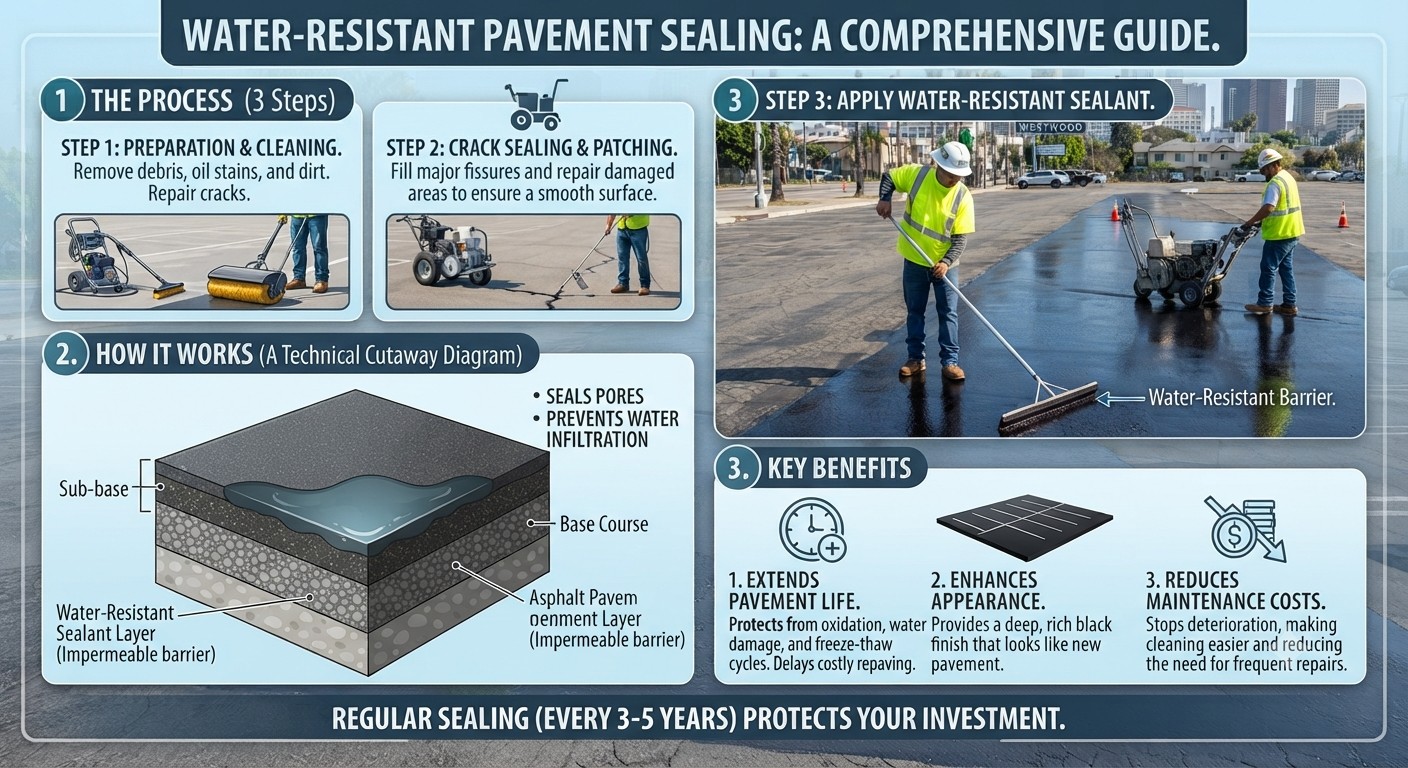
How Water-Resistant Asphalt Sealing Works
Semi-porous sealant is probably one of the best to use in Southern California. These sealants keep the water out, but still allows the pavement to “breath” (aka, expand or contract with the temperature). Unlike generic products, these compounds have been engineered to offer a high penetration factor for superior bonding to your existing pavement while defending against water, oil and ultraviolet damage.
A professional application typically includes:
-
Thorough surface cleaning
-
Crack filling and minor repairs
-
Even application of water-resistant sealant
-
Sufficient time to allow the sealant to cure before allowing pedestrians or vehicles on it.
Parking Lot Sealing
There are hundreds (perhaps even thousands?) of parking lots in South Los Angeles. Here’s an example of what happened to one property owner.
A retail plaza in South LA put off sealing its parking lot for years. Following two extremely wet winters, standing water appeared in surface cracks. If the owner let the water and cracked surfaces remain, he was looking at repair estimates that would have topped $38,000. So the owner decided to use a water repellent pavement sealer. The result:
-
70% reduction in water pooling
-
No additional cracks after two seasons of rain
-
Maintenance costs dropped significantly
According to industry studies, professionally applied asphalt sealer can extend the life of these surfaces by as much as 50%, a substantial cost savings for Los Angeles property owners.
Driveways vs. Parking Lots: Different Demands, Equal Protections
Waterproof driveway sealers are used as a preventive maintenance to protect asphalt from the elements. It also adds curb appeal with a sleek, black finish.
Parking lot sealing in LA has to accommodate heavier loads, regular traffic and safety regulations. As a plus, water-resistant sealers can reduce surface erosion, help minimize pothole formation and keep striping visible longer.
When is the Best Time to Seal Asphalt in Los Angeles?
In Los Angeles? Pretty much all year long. Timing for asphalt sealants does matter. This is not a project you can complete in the rain. Therefore, the best time to install water resistant pavement sealing in Los Angeles is:
-
Late spring through early fall, as long as temperatures remain above 55°F
-
During dry spells (no rains expected within 24–48 hours of the sealant being applied)
It is recommended that you re-seal your asphalt every two to three years, depending upon wear-and-tear and exposure.
Practical Tips for LA Property Owners
Adding water resistant seals to your pavement isn’t just an aesthetic investment. It’s a decision that can save Los Angeles property owners time and money in the long run. Sealing prevents damage from moisture, cracking, heat and UV light, which all contribute to the lifespan of your asphalt. Keep an eye on your asphalt routinely and look for the following:
-
Check your pavement for puddling or dark spots of moisture following a heavy rain
-
Seal little cracks right away — damage from water piles up quickly
-
Select water resistant sealers, not generic stone and tile treatments
-
Choose and hire local contractors who know the climate of LA to complete your project.
Don’t put up with your old, worn out asphalt. Call us today for a free estimate to apply water resistant sealant on your pavement.